
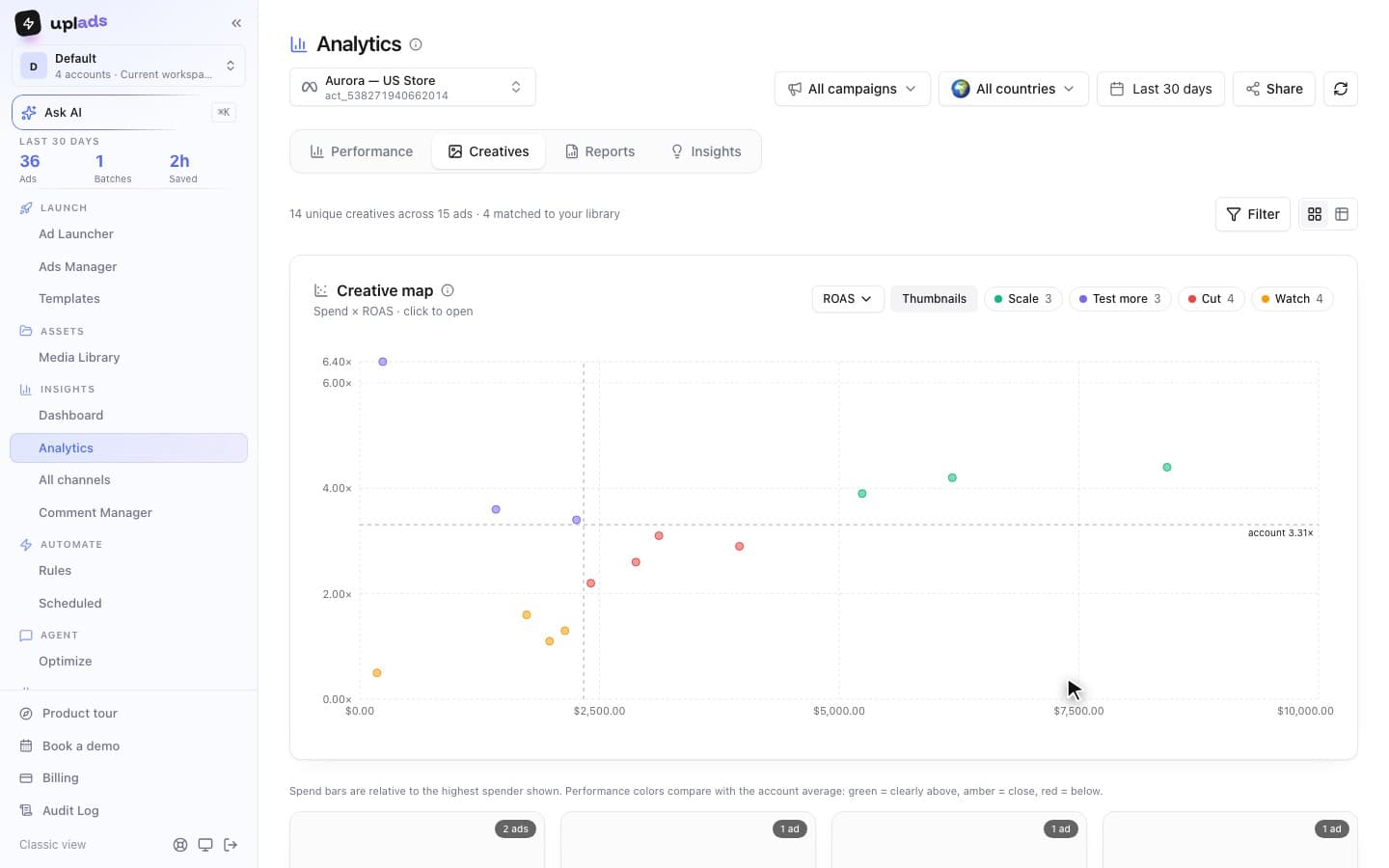
Search "facebook ad fatigue signals" and every result hands you the same flat list: watch your CTR, watch your frequency, watch your CPM. All true, all unordered, and all missing the part that actually matters. These metrics do not move at the same time. They move in a sequence, and the sequence is the early-warning system. If you only react when cost per action climbs, you are reading the last signal in the chain and acting two to three weeks too late.
I build the launch tooling for an Austrian performance marketing agency that runs paid ads for ecommerce brands. Across client accounts, the pattern was always the same: detecting fatigue was never the bottleneck. Anyone watching the dashboard could see frequency climbing. The bottleneck was that refreshing meant half a day of manual relaunch per account, so teams quietly waited until return on ad spend visibly cratered before doing anything. This piece is the version of fatigue I wish those dashboards had explained: which signals lead, which lag, and why the real problem is refresh speed, not detection.
What are the signals of Facebook ad fatigue?
Facebook ad fatigue is the point where your target audience has seen the same creative so many times that it stops paying attention, and the signal is a chain of metrics moving against you in order: frequency up, then click-through rate and engagement down, then CPM up, then CPC up, then cost per action up, then ROAS down.
Most guides stop at listing those metrics. The list is correct but useless on its own, because a flat list implies you watch them all equally. You do not. Each metric is a different distance from the moment the creative actually went stale. Frequency is the cause. Falling CTR is the audience reacting. Rising CPM is Meta's auction reacting to the falling engagement. Rising CPA and falling ROAS are the accountant's view: real money already lost. Treat the list as a timeline and it becomes an early-warning system instead of a post-mortem.
The order Facebook ad fatigue signals appear
The signals appear in a consistent order, from leading indicators you can act on to lagging indicators that only confirm the damage is done.
Read that chart as a single sentence: frequency is the cause, CTR is the audience telling you, CPM is the auction agreeing, and CPA and ROAS are the invoice. The accounts that stay ahead of creative fatigue watch the top two bars. The accounts that get surprised by it watch the bottom two, which is the same as not watching at all, because those numbers only move once the spend is gone.
Why frequency is the earliest fatigue signal
Frequency is the earliest signal because it is the cause, not a symptom: it measures how many times the average person in your target audience has seen the ad, and fatigue is definitionally caused by repeat exposure.
In Ads Manager, pull frequency at the ad level on a 7-day trailing window, not lifetime and not at the campaign level where a fresh ad set masks a tired one. The exact number where fatigue bites is not universal, but the working pattern most performance teams use is simple: when frequency climbs past roughly 2 to 3 in a short window and click-through rate is falling on the same creative over the same window, that ad is fatiguing now, regardless of what cost per action still says. Frequency rising while CTR holds is fine. Frequency rising while CTR drops is the signal. The two together, in that order, are worth more than any single threshold. On the few objectives that allow one, a Facebook ads frequency cap can slow the climb, but it treats the symptom, not the tired creative.
What "Creative limited" vs "Creative fatigue" means in Ads Manager
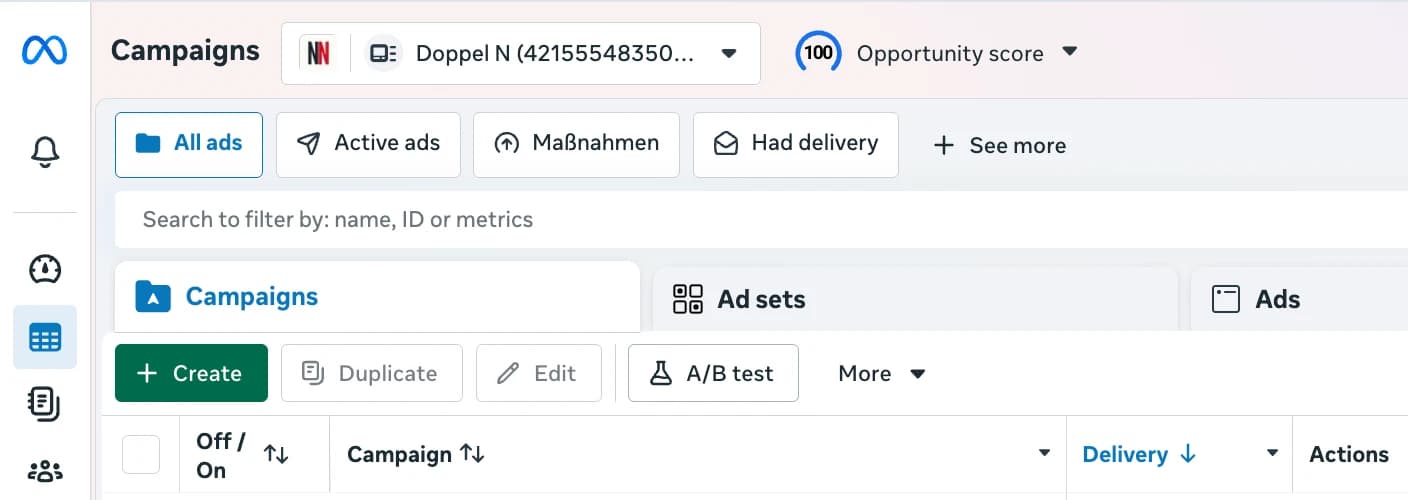
Meta gives you a platform-native fatigue signal for free: a Creative limited or Creative fatigue status in the Delivery column for an ad set or ad, shown when Meta estimates your audience has seen the same image or video too many times, counting recent exposures across campaigns from your Page.
That last detail matters and most explanations skip it. The exposure count is not scoped to one campaign. If the same creative runs in a prospecting campaign and a retargeting campaign, Meta tallies both, which is why a creative can be flagged as fatigued even though no single campaign looks heavy.
When you see this status, per Meta's own creative fatigue guidance, the answer it expects is a genuinely different creative, not a headline swap on the same video. Treat the Delivery column as the cheapest fatigue detector you already own, then treat the flat metrics above as the early-warning layer the Delivery column does not give you, because the status tends to appear once fatigue is already obvious rather than while it is still cheap to fix.
Creative fatigue vs audience saturation: a different fix
Creative fatigue and audience saturation produce the same dashboard but need opposite responses: creative fatigue is solved by a new concept to the same audience, while audience saturation means the audience is too small for the spend and a new creative only buys a short reprieve.
The tell is in audience size and how fast frequency is climbing. A fresh creative that also fatigues within days, on a narrow audience or a small lookalike, is not a creative problem. That is the budget outrunning the available people, and the real fixes are widening targeting, building larger lookalike audiences, or lowering daily spend so the same audience lasts longer. Misdiagnosing saturation as fatigue is the most expensive mistake here, because you burn production hours making new creative for a problem new creative cannot solve.
How long before Facebook ad fatigue sets in?
There is no fixed number of days, because ad fatigue is a function of budget relative to audience size, not the calendar.
A high daily budget pushed against a narrow audience can fatigue a strong creative in a few days. A modest budget against a broad audience can run the same creative for weeks without the signals moving. This is why "refresh every 14 days" advice fails: it is timing a process that is not driven by time. The reliable predictor is the growth rate of frequency for the spend you are actually running. If frequency is climbing fast for your budget, fatigue is close no matter how new the creative is. If it is climbing slowly, you have room. Forecast off the rate, not the date.
Reduce budget, duplicate, or replace the creative?
When an ad fatigues you have three moves, and they are not interchangeable: reduce budget to slow the bleed, duplicate the ad set to reset, or replace the creative outright. Replace is almost always the right call, the other two are delaying tactics.
Reducing budget slows frequency growth but does not make a stale creative interesting again, so it buys days, not a recovery. Duplicating the ad set into a fresh one is the move people reach for most and understand least: a duplicate with the same creative re-enters Meta's learning phase and resets your delivery history while still showing the audience the creative it is already tired of, so you pay the learning-phase cost for no creative change.
Duplication only helps when you pair it with a genuinely new creative. The durable fix is the unglamorous one: a steady supply of fresh creative concepts, launched before the old one is dead, so there is always a new contender already in delivery when the current winner decays. That only works if launching the replacement is fast.
Launch 100+ ads in a single click
Stop waiting until ROAS craters to refresh. Launch a fresh batch of creative concepts in one pass with uplads so a new contender is always in delivery before the old one fatigues. See plans and what a batch launch costs.
The real bottleneck is refresh speed, not detection
Here is the uncomfortable part the fatigue guides skip: detecting Facebook ad fatigue is the easy half. The signals are well understood, they fire in a predictable order, and Meta hands you a Creative limited flag at no cost. Almost every team I have seen could already tell you which creative was dying. What they could not do was replace it fast enough, so the dying creative kept spending while the replacement sat in a backlog.
That gap is an operations problem more than an analytics one. uplads covers both halves on Meta, but the second half is the reason it exists. For detection, its Meta reporting table shows frequency, link CTR, CPM and ROAS per ad for any date range. On the Growth and Agency plans, an automated rule on Meta or TikTok can watch frequency and CTR and pause an ad or alert you, checking as often as every 30 minutes, and the AI Optimizer on Meta flags creatives whose click-through has decayed and proposes a pause that you approve. None of that decides for you whether you are looking at fatigue or saturation.
What ends the wait is the launch. You upload a week's worth of new concepts once, and they fan out across every ad set you select in a single pass, with your naming convention applied automatically and aspect-ratio variants (4×5 for Feed, 9×16 for Stories and Reels) grouped into one ad per concept. The half-day of manual relaunch goes away, and the launch stops being the reason you waited.
A weekly routine that beats ad fatigue
The accounts that never get blindsided by creative fatigue do not have better dashboards, they have a standing weekly cadence: read the leading signals, decide what to retire, and launch the replacements the same day.
Concretely, that is a fifteen-minute Monday review of frequency and CTR at the ad level, a short list of concepts to retire and concepts to ship, and a single batch launch of the new creative so a fresh contender is always entering delivery before the current winner decays.
The decision logic is covered in our Facebook ads creative testing framework and the cadence itself in the weekly creative test workflow; how many concepts to put in each ad set is its own question, answered in how many creatives per ad set in 2026. The signals tell you when. The routine is what makes "when" matter, because a fatigue signal you cannot act on quickly is just a more precise way to watch money leave.